
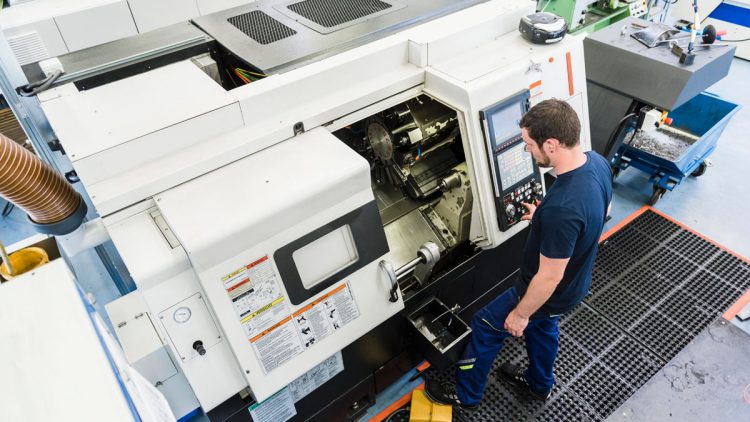
Difference Between CNC Milling and CNC Turning
Customers, or potential customers go to us frequently ask for a CNC machining service when wanting to create a metal piece with a complex shape. Whereas using this general terminology is common and refers to the exact manufacturing approach, CNC machining involves two different approaches.
They are milling and turning. Both are CNC machining approaches; however, they’re not the same.
CNC is in reference to computer numerical control, which means that CNC milling and CNC turning utilize computer systems to control the cutting machinery.
Great CAD-CAM software can effortlessly convert a 3D model into easy-to-read code for CNC machines. This is going to determine the use and movement of devices, cutting pathways, and so forth.
Whereas engineers can make the decision relevant to suitable operations for a certain part, it could be interesting to know where the difference lies.
What are the Differences Between CNC Milling and Turning?
In short: CNC milling utilizes a rotating tool, whereas CNC turning utilizes a rotating part for cutting.
Therefore, the two use different approaches to create a part. Whereas milling machines create intricate parts from metal blocks by carving away the extra material, turning is typically used for cylindrical components such as shafts.
What is CNC milling?
Beginning with milling. Initially, there are 3-axis CNC milling machines that are more conventional. The cutting device can move in three directions – X, Y and Z axis.
Whereas this sets a couple of limits to the geometry of the components, it is enough to finish most projects that require milling. A broad range of milling devices can provide different cutting approaches such as face milling, end milling, hollow milling, and so forth.
Multi-axis milling enables 4 or more axes, comprising the rotation of the tool and worktable. This gives an added dimension of adaptability. 5-axis milling machines are the most typical of these and are able to create almost everything that can be manufactured through milling.
The dimensions of the raw metal block are typically larger than the overall dimensions of the final component. For this reason, precision milling is realizable for every side. They have very tight tolerances, so attaining a great surface finish is readably doable.
What is CNC turning?
As aforementioned, CNC turning services are mainly used for creating cylindrical parts. These could be shafts, custom hollowed-out tubes, conical shapes or any other axially symmetrical component.
Whereas 5-axis machining can additionally create cylindrical components, turning is simply more efficient and the hourly wage for these types of machines is decreased.
The chuck retains the raw material, typically a round bar, in place. The chuck rotates along with the spindle at a high rate of speed. The top speed, or RPM, is subject to the machinery.
The single-point cutting tool is attached to a tool turret. The tool turret can move to and from the working piece while it is rotating, bringing the devices into contact with metal for cutting.
This extremely accurate machining approach makes it possible to reach tighter tolerances. This is reason limits and fits typically go with the hole-basis system, as attaining the required accuracy on the shaft is much simpler.
CNC Machining Conclusion
Whereas these two are usually contained within the same term – CNC machining – they’re not the same. Nevertheless, they can complement one another beautifully to create parts with high precision.
East Valley Precision – Custom Machinery Specialists
East Valley Precision offers custom CNC Machining in the Chandler, Arizona and surrounding areas. When you need precision CNC machining and milling contact East Valley Precision. Call us at 480-288-6601 for more information or use our form for a quote.