
Difference Between CNC milling and CNC Turning
Written by webtechs

Difference Between CNC Milling and CNC Turning

Customers, or potential customers go to us frequently ask for a CNC machining service when wanting to create a metal piece with a complex shape. Whereas using this general terminology is common and refers to the exact manufacturing approach, CNC machining involves two different approaches.

They are milling and turning. Both are CNC machining approaches; however, they’re not the same.

CNC is in reference to computer numerical control, which means that CNC milling and CNC turning utilize computer systems to control the cutting machinery.

Great CAD-CAM software can effortlessly convert a 3D model into easy-to-read code for CNC machines. This is going to determine the use and movement of devices, cutting pathways, and so forth.

Whereas engineers can make the decision relevant to suitable operations for a certain part, it could be interesting to know where the difference lies.

What are the Differences Between CNC Milling and Turning?

In short: CNC milling utilizes a rotating tool, whereas CNC turning utilizes a rotating part for cutting.

Therefore, the two use different approaches to create a part. Whereas milling machines create intricate parts from metal blocks by carving away the extra material, turning is typically used for cylindrical components such as shafts.

What is CNC milling?

Beginning with milling. Initially, there are 3-axis CNC milling machines that are more conventional. The cutting device can move in three directions – X, Y and Z axis.

Whereas this sets a couple of limits to the geometry of the components, it is enough to finish most projects that require milling. A broad range of milling devices can provide different cutting approaches such as face milling, end milling, hollow milling, and so forth.

Multi-axis milling enables 4 or more axes, comprising the rotation of the tool and worktable. This gives an added dimension of adaptability. 5-axis milling machines are the most typical of these and are able to create almost everything that can be manufactured through milling.

The dimensions of the raw metal block are typically larger than the overall dimensions of the final component. For this reason, precision milling is realizable for every side. They have very tight tolerances, so attaining a great surface finish is readably doable.

What is CNC turning?

As aforementioned, CNC turning services are mainly used for creating cylindrical parts. These could be shafts, custom hollowed-out tubes, conical shapes or any other axially symmetrical component.

Whereas 5-axis machining can additionally create cylindrical components, turning is simply more efficient and the hourly wage for these types of machines is decreased.

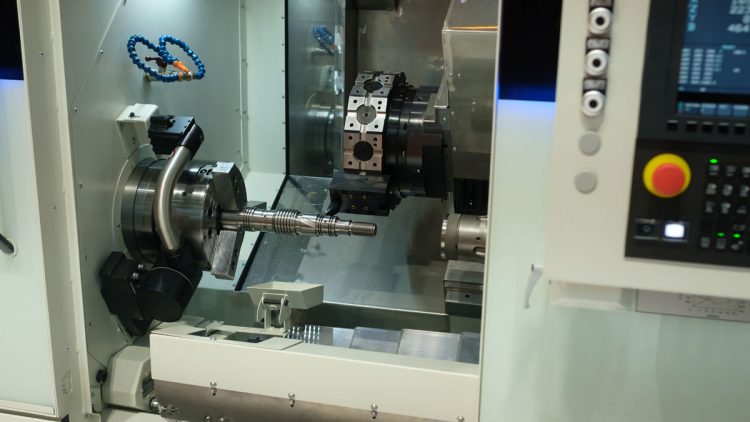
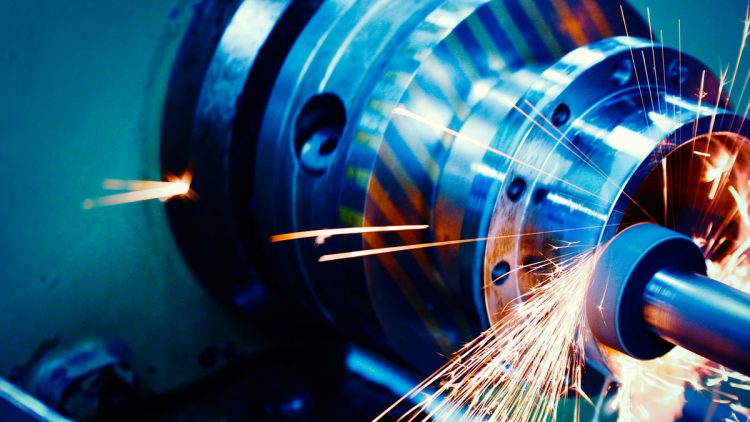
The chuck retains the raw material, typically a round bar, in place. The chuck rotates along with the spindle at a high rate of speed. The top speed, or RPM, is subject to the machinery.

The single-point cutting tool is attached to a tool turret. The tool turret can move to and from the working piece while it is rotating, bringing the devices into contact with metal for cutting.

This extremely accurate machining approach makes it possible to reach tighter tolerances. This is reason limits and fits typically go with the hole-basis system, as attaining the required accuracy on the shaft is much simpler.

CNC Machining Conclusion

Whereas these two are usually contained within the same term – CNC machining – they’re not the same. Nevertheless, they can complement one another beautifully to create parts with high precision.

East Valley Precision – Custom Machinery Specialists

East Valley Precision offers custom CNC Machining in the Chandler, Arizona and surrounding areas. When you need precision CNC machining and milling contact East Valley Precision. Call us at 480-288-6601 for more information or use our form for a quote.
Different Lathe Types
Written by webtechs

Different Lathe Types

CNC machining centres may come with live tooling. While single-point cutting tools are suitable for most turning operations, live tooling refers to mills, drills and other tools that have their own power. This allows the creation of keyways or holes perpendicular to the part axis without using any other machinery in the process.

Control panel

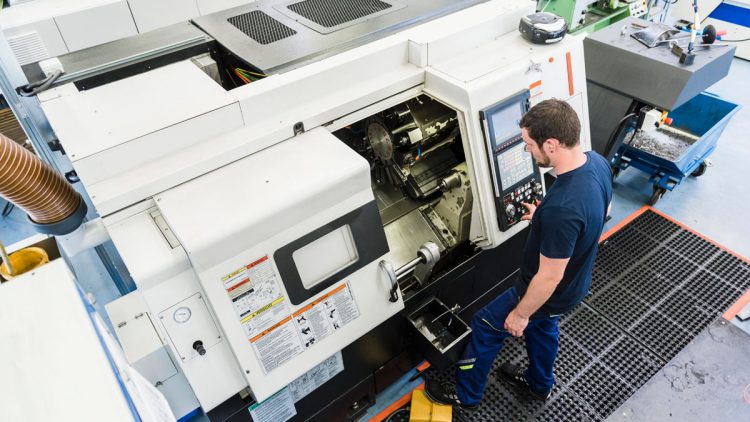
This is where computer numerical control kicks in. The brains of CNC turning machines are just behind the panel. The panel itself allows the operator to adjust the program and start it.

Types of Lathes

A wide range of CNC lathes offers a variety of possibilities. Each comes with a unique set of features while some are more automated than others. So everything has its place, whether a few one-off jobs at a small machine shop or batch production for larger quantities.

Bench lathe

The name suggests that it is small enough to attach it to a tailored workbench. They are, still, larger than micro or mini-lathes.

A great way to perform general machining or a special tool for a hobbyist, it can perform many of the necessary operations. A bench lathe requires a skilful machinist as there is little to no automation, putting more responsibility on the operator.

Engine lathe

The most common type of lathe. The name has stuck since the 19th century when a steam engine made this specimen stand out in the midst of other manual lathes. Since the beginning of the 20th century, a conversion towards electric motors got on its way.

Using gearboxes in the headstock made the choice of spindle speed easy and high-speed machine tools became the norm. The new-found power pushed the industry to invent new ways of increasing the tool life. Replaceable carbide inserts were just the way to do that.

As a result, engine lathes can perform CNC machining at high speeds, leading to shortened production times and lower costs. Although still common in workshops, engine lathes laid the foundation for improved performance and the automation of machining.

Toolroom lathe

Similar to an engine lathe with a few differences. Usually, they are smaller in size to fit in tighter spaces. At the same time, there are some extra capabilities available, making it rather a higher-end machine, not one suitable for entry-level.

The toolroom lathes include chuck and collets, taper attachment among other things that, for example, simpler bench lathes do not have.

Turret and capstan lathes

These types of lathes are pretty much interchangeable based on the operations they can perform. As you learned before, the use of a turret opens up a wide range of automation possibilities. Also, many more operations can be performed on a single workbench.

From turning and boring to drilling, threading, and making keyways, everything is possible without a change of tools. The turret holds all the necessary tooling at once, so you can easily go from one process to the next.

Coupling CNC with fewer manual tasks, and producing almost identical machined parts in batches is a strong point of this type of lathe.

Swiss-type lathe

Swiss lathes operate with incredibly small tolerances at shorter cycle times than conventional lathes, making them an attractive option for manufacturing complex parts at larger volumes.

Swiss machines have a moving headstock, allowing the workpiece to be repositioned along the z-axis as it undergoes the machining process. In other words, to cut lengthwise along the part, the tools will move in and the material itself will move back and forth along the z-axis. This allows all the work to be done on the material near the guide bushing where it is more rigid, eliminating deflection and vibration.

Multispindle lathe

The multispindle lathe has more than a single spindle. The additional capacity is especially suitable for high-volume production.

Setting up the machine requires quite a lot of time, so the combination of this and the high cost of the machine itself needs high-volume production to pay it off. When applying this, they can create similar parts with high precision, low cycle times and very little manual work aside from the initial setup.

So large-batch manufacturing can considerably lower the cost of CNC machining.

CNC lathe

Although some of the aforementioned types also accommodate a CNC system, the CNC lathe deserves a separate mention.

CNC refers to computer numerical control, which takes care of operating the machine to some extent. This depends on the specific machinery, as they can be fully or semi-automatic.

Semi-automatic CNC lathes need a little more work from the machine operator whereas fully automatic centres are able to do everything from mounting the workpieces to changing the tools.

The highly accurate CNC machines are the best the contemporary industry has to offer. Digitising the whole process from the creation of CAD to a fully finished part is possible. Also, the enclosures significantly reduce the risk during machining, as the workers are not really exposed to any moving components, controlling anything necessary from a computer screen.

East Valley Precision – Custom Machinery Specialists

East Valley Precision offers custom CNC Turning in the Chandler, Arizona and surrounding areas. When you need precision CNC turning and milling contact East Valley Precision. Call us at 480-288-6601 for more information or use our form for a quote.
Milling vs Turning
Written by webtechs

Milling vs Turning

The manufacturing industry uses lots of machining processes to create workpieces out of raw or half-formed materials, some of the most typical of which comprise of milling and turning. Similar to other machining processes, each of them necessitates the utilization of a machine. Through milling and turning, a machine is used for removing material from a workpiece, as a result altering the shape and size of it. So, what are the differences between milling and turning?

What Is Milling?

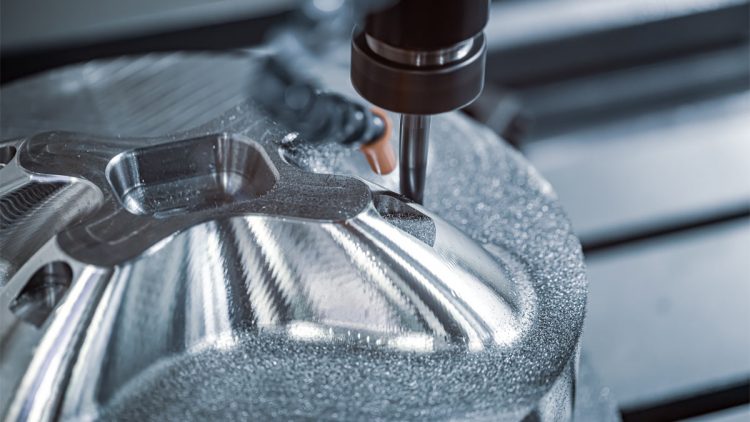
Milling is a machining process in which a machine — usually a milling machine — takes away material from an immobile workpiece with a spinning cutting device. The canon behind this machining process is like turning: a cutting tool is pressed toward a workpiece, therefore taking away material from it. The primary differences between these two machining processes lie in their use of spinning. In turning, the workpiece spins. In milling, the cutting device spins.

There are two primary categories of milling processes: face and peripheral milling. Face milling is attributed to a cutting process at or near the corners of the cutting device. By comparison, peripheral milling is characterized by a cutting process along the diameter of the cutting device. Whether or not it’s face or peripheral, nevertheless, all milling processes entail the spinning of the workpiece. The cutting device used in milling processes doesn’t spin. Instead, it always stays stationary.

What Is Turning?

Turning, in contrast, is a machining process in which a machine — usually a lathe — takes away material from a spinning workpiece with a cutting device. Through turning, the workpiece moves where in which the cutting device stays fixed.

Boring is one other process that entails using a lathe. With each boring and turning, the lathe’s stationary cutting device gets pressed toward a spinning workpiece. The dissimilarity is that turning is designed to take away material from the outside of a workpiece, conversely boring is designed to take away material from the inside of a workpiece. Boring, for example, can be utilized to expand pre-bored holes in a workpiece by taking away material from the holes inside walls

In Closing

Milling and turning are two general machining processes that take away material from a workpiece with the assistance of a cutting device. However, they use different processes to achieve this objective. Turning drives the workpiece to spin, where in which milling drives the cutting device to spin. Using different mechanisms, they each provide unique advantages when used in the manufacturing industry.

East Valley Precision – Custom Machinery Specialists

East Valley Precision offers custom CNC Turning in the Chandler, Arizona and surrounding areas. When you need precision CNC turning and milling contact East Valley Precision. Call us at 480-288-6601 for more information or use our form for a quote.

Different Lathe Types
Written by webtechs

What is CNC Turning?

Are you thinking about different manufacturing methods to make your part(s)? Want to learn more about CNC turning to determine if it’s suitable for your application?

CNC Turning is a method of manufacturing in which bars of material are kept in a chuck and “turned” while a device is fed to the piece for removing material to create the required shape. A turret, with a device attached is programmed for moving the bar of raw material and eliminates material to create the pre-programmed result. This is also known as “subtraction machining” due to it involving material “subtraction”. If the machine shop has both tuning and milling abilities the rotation can be stopped for allowing the milling out of additional shapes.

Meaning of CNC Turning

CNC Turning can be broke down into 2 parts:

  • CNC” is an acronym for computer numerical control and portrays the mechanization of a machining method.
  • Turning” is a method in which the workpiece turns whereas a single pointed cutting device removes material.

The initial material, though usually round, can be other shapes like hexagonal or squares-shaped raw materials.

Subject to the bar feeder, the length of the bar can differ. This impacts how much handling is needed for high-volume jobs.

CNC lathes or CNC turning machine shops have tools installed on a turret in which is controlled via computer. The more tools that the turret can accommodate, the more choices are available for intricacies on the part.

CNCs with “live” tooling choices, can stop the bar rotation and add additional features like drilled holes, slotted and/or milled areas.

Many CNC turning shops have a single spindle, allowing work to be done all from one side, whereas other turning shops, have two spindles, a primary and sub-spindle. A part can be partially machined on the primary spindle, moved to the sub-spindle and have added work done to the other side of this configuration.

CNC Turning

There are many various kinds of CNC turning shops with different types of tooling and spindle options, outer diameter restrictions in addition to speed and power capacities that impact the types of parts that can be inexpensively made on it.

Turning is an adaptable machining method capable of making a wide variety of profiles subject to the turning method used. The usefulness of lathes and turning shops allows for straight turning, knurling, taper turning, external grooving, boring, threading, and drilling.

Overall, lathes are limited to more simple turning operations, such as straight turning, external grooving, threading, and boring processes. The tool turret on turning shops allows the shop to finish all the operations of a lathe in addition to more complex operations, like drilling off the rotation axis.

East Valley Precision – Custom Machinery Specialists

East Valley Precision offers custom CNC Turning in the Chandler, Arizona and surrounding areas. When you need precision CNC turningand milling contact East Valley Precision. Call us at 480-288-6601 for more information or use our form for a quote.