Machining Tolerances
Tolerances allude to the total admissible variation from a dimension’s basic value and guarantees a component fits and functions the way it was intended.
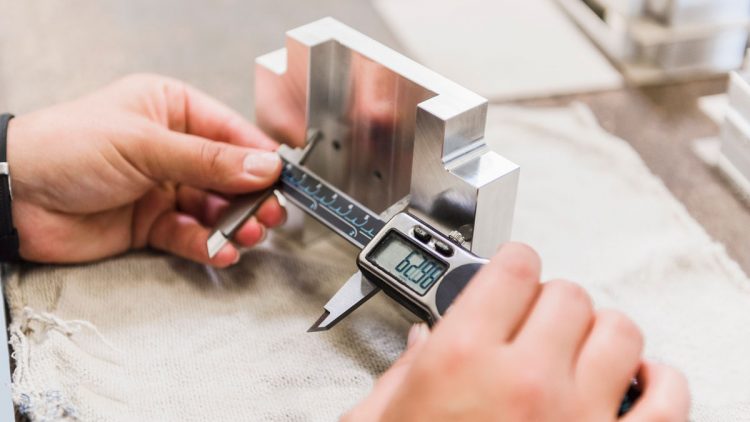
Tolerances are verified throughout the quality inspection following CNC machining. They guide the selection of manufacturing methods required for a component. Tighter tolerances might require advanced equipment or additional processing to fulfill the necessary dimensions.
For CNC machined components, different kinds of tolerances can be determined and used.
Types of CNC Machining Tolerances
In CNC machining, “tolerance” is in reference to how precisely a machine can shape a component. CNC machines are unbelievably precise, with some attaining an accuracy of ± 0.0025mm, somewhere around a 1/4 of a human hair’s width. Nevertheless, tolerances vary among machines and are usually set by the manufacturer, with 0.02mm being a general standard. CNC service providers additionally inform customers concerning their machines’ tolerances.
In design and manufacturing, tolerance is in reference to the allowable range of size differences for a component that still guarantees it works correctly. Designers place these tolerances on the basis of the components function, fit, and form. Tolerances are crucial for components that connect or interact with other components. For example, components of an electric engine need tighter tolerances than door handles since they have more features that are required to fit together precisely. Tolerances are shown by a number beside the applicable dimension.
Standard Tolerances
These tolerances are widely used to determine how much a CNC machined component’s dimensions can differ. These tolerances could represent what a machine shop can create without additional cost or serve as a common variation applied to a complete drawing, as indicated in a note or title block, unless specified otherwise in the drawing or on certain attributes.
Limit Tolerances
This tolerance is the determined minimum and maximum dimension permitted on a drawing. Also referred to as limits of size, these offer the upper and lower size limits for an element. Making it easy to swiftly verify if a measured proportion lies inside the tolerance sector, without requiring calculating perimeter proportions from tolerance allowances.
Unilateral Tolerances
Unilateral is in reference to something corresponding to one side. With regard tolerances, it means the tolerance is employed in only one direction, either + or -. In Geometric Dimensioning and Tolerancing, this is known as an asymmetrical profile tolerance and is tagged with a U. Usually, these tolerances are utilized at maximum material condition.
Bilateral Tolerances
These tolerances refer to something corresponding to two sides. With regard to tolerances, it means that both the positive and negative restrictions are considered as a particular measurement. This gives the smallest and largest allowable sizes for that dimension. The tolerance can be identical on both sides or differ among them.
Sources of Variation in Machined Components
CNC-machined components are not by any means flawless. Deviations among these components are expected to be the result of several aspects.
Types of Raw Material
Harder materials allow for closer tolerances since they maintain their shape and resist deflection throughout machining. They provide greater dimensional constancy as compared to softer materials. Furthermore, materials with a lower coefficient of thermal expansion (CTE) are less impacted by temperature changes, allowing even closer tolerances.
Condition of the Workpiece
Using unvarying and precise stock materials considerably minimizes deviations. The quality of the raw materials directly impacts the quality of the final product.
CNC Machine Utilized
Whereas more costly machinery doesn’t always guarantee higher quality components, it typically does. Machines that sustain closer tolerances are usually built with higher-quality raw materials, thermal compensations, and progressive programming, guaranteeing precise tooling alignment throughout milling.
Tooling
In the absence of precise and accurate tooling, achieving close tolerances is nearly impossible, without regard to how well you prepare your material.
East Valley Precision – Custom Machinery Specialists
East Valley Precision offers custom CNC Machining in the Chandler, Arizona and surrounding areas. When you need precision CNC machining and milling contact East Valley Precision. Call us at 480-288-6601 for more information or use our form for a quote.