
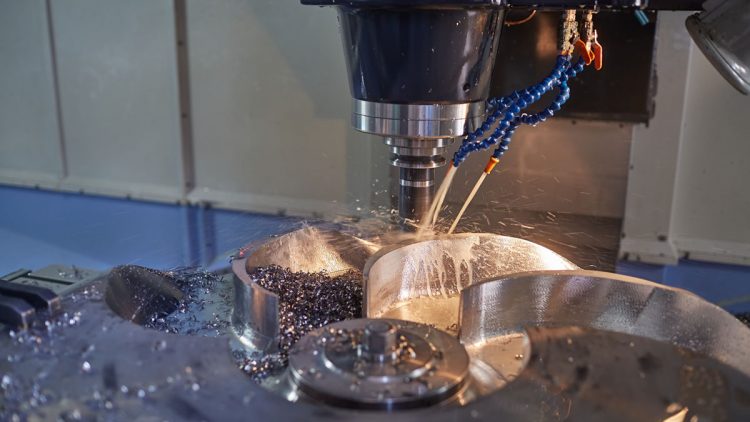
Types of Milling Operations
The term “milling” is in reference to the production process of utilizing a circular cutting device on the ends and sides of a material empty to make a finished component. That’s clearly just a very overall summation; there are really about 30 different types of milling processes, ten of which (the most generally used ones) we are going to discuss in this post.
Types of Milling Operations
The following are only a portion of the types of milling operations:
1. Face Milling
This type of milling is favored in the production industry because it can be used to make precise and smooth surfaces, even on bigger pieces. It can create pockets and steps using metal by making the material flat and smoothing out its top area. This type of mill also comes with cutting edges on its “face”, in which is the component that appears like a diskette, and these cutting devices carry out this process by trimming off material from a work piece horizontally until it achieves the depth necessary (this is going to be pre-set by the machinist).
2. Slot Milling
Slot milling creates slots (such as crevices or grooves) in any size with a slot cutter which appears somewhat like a circular saw blade. This is going to be carved into the sides of the materials to carry out the job, however, you can also utilize an end mill that is going to cut on its face and side. It essentially carves out a crevice in the material, creating things such as the channel keys go into (key-ways) and other types of grooves.
3. End Milling
The device utilized in end milling has edges for cutting on each of its end and sides and can create things such as pockets, slots, and profiles. This technique is typical since it is adaptable. It’s somewhat like a drill bit that is able to cut straight down (plunging) however it can also cut sideways.
4. Thread Milling
The spiraling threads you are going to find on bolts and screws are created through thread milling. The device has a lot of cutting edges and is capable of making threads in a lot of various materials, in all various sizes, and can even address more complicated designs. The thread milling device for cutting (known for its durability and preciseness) spins around the material along the thread path for cutting the threads. Its capabilities are pretty much restricted to making threads; however, it does make them extremely well.
5. Shoulder Milling
Shoulder milling removes material from the side of a work piece (the “shoulder” or “side-wall”) with various cutting tools, such as end mills, for making flat, ninety-degree angles, such as for steps.
East Valley Precision – Custom Machinery Specialists
East Valley Precision offers custom CNC Machining in the Chandler, Arizona and surrounding areas. When you need precision CNC machining and milling contact East Valley Precision. Call us at 480-288-6601 for more information or use our form for a quote.