Machining Tolerances
Written by webtechs

Machining Tolerances

Tolerances allude to the total admissible variation from a dimension’s basic value and guarantees a component fits and functions the way it was intended.

Tolerances are verified throughout the quality inspection following CNC machining. They guide the selection of manufacturing methods required for a component. Tighter tolerances might require advanced equipment or additional processing to fulfill the necessary dimensions.

For CNC machined components, different kinds of tolerances can be determined and used.

Types of CNC Machining Tolerances

In CNC machining, “tolerance” is in reference to how precisely a machine can shape a component. CNC machines are unbelievably precise, with some attaining an accuracy of ± 0.0025mm, somewhere around a 1/4 of a human hair’s width. Nevertheless, tolerances vary among machines and are usually set by the manufacturer, with 0.02mm being a general standard. CNC service providers additionally inform customers concerning their machines’ tolerances.

In design and manufacturing, tolerance is in reference to the allowable range of size differences for a component that still guarantees it works correctly. Designers place these tolerances on the basis of the components function, fit, and form. Tolerances are crucial for components that connect or interact with other components. For example, components of an electric engine need tighter tolerances than door handles since they have more features that are required to fit together precisely. Tolerances are shown by a number beside the applicable dimension.

Standard Tolerances

These tolerances are widely used to determine how much a CNC machined component’s dimensions can differ. These tolerances could represent what a machine shop can create without additional cost or serve as a common variation applied to a complete drawing, as indicated in a note or title block, unless specified otherwise in the drawing or on certain attributes.

Limit Tolerances

This tolerance is the determined minimum and maximum dimension permitted on a drawing. Also referred to as limits of size, these offer the upper and lower size limits for an element. Making it easy to swiftly verify if a measured proportion lies inside the tolerance sector, without requiring calculating perimeter proportions from tolerance allowances.

Unilateral Tolerances

Unilateral is in reference to something corresponding to one side. With regard tolerances, it means the tolerance is employed in only one direction, either + or -. In Geometric Dimensioning and Tolerancing, this is known as an asymmetrical profile tolerance and is tagged with a U. Usually, these tolerances are utilized at maximum material condition.

Bilateral Tolerances

These tolerances refer to something corresponding to two sides. With regard to tolerances, it means that both the positive and negative restrictions are considered as a particular measurement. This gives the smallest and largest allowable sizes for that dimension. The tolerance can be identical on both sides or differ among them.

Sources of Variation in Machined Components

CNC-machined components are not by any means flawless. Deviations among these components are expected to be the result of several aspects.

Types of Raw Material

Harder materials allow for closer tolerances since they maintain their shape and resist deflection throughout machining. They provide greater dimensional constancy as compared to softer materials. Furthermore, materials with a lower coefficient of thermal expansion (CTE) are less impacted by temperature changes, allowing even closer tolerances.

Condition of the Workpiece

Using unvarying and precise stock materials considerably minimizes deviations. The quality of the raw materials directly impacts the quality of the final product.

CNC Machine Utilized

Whereas more costly machinery doesn’t always guarantee higher quality components, it typically does. Machines that sustain closer tolerances are usually built with higher-quality raw materials, thermal compensations, and progressive programming, guaranteeing precise tooling alignment throughout milling.

Tooling

In the absence of precise and accurate tooling, achieving close tolerances is nearly impossible, without regard to how well you prepare your material.

East Valley Precision – Custom Machinery Specialists

East Valley Precision offers custom CNC Machining in the Chandler, Arizona and surrounding areas. When you need precision CNC machining and milling contact East Valley Precision. Call us at 480-288-6601 for more information or use our form for a quote.
Types of Milling Operations
Written by webtechs

Types of Milling Operations

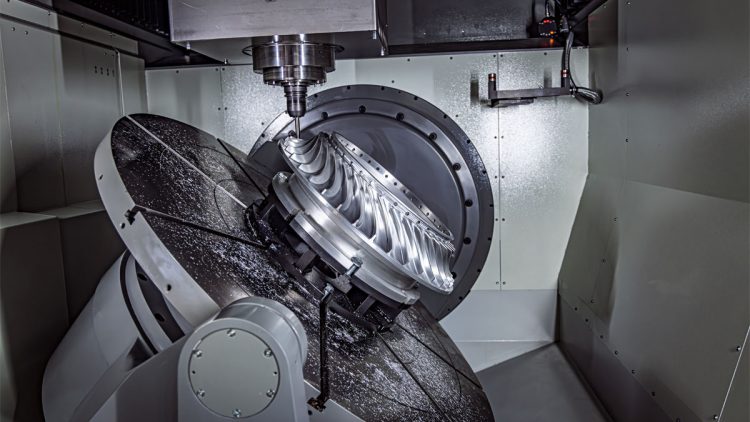
The term “milling” is in reference to the production process of utilizing a circular cutting device on the ends and sides of a material empty to make a finished component. That’s clearly just a very overall summation; there are really about 30 different types of milling processes, ten of which (the most generally used ones) we are going to discuss in this post.

Types of Milling Operations

The following are only a portion of the types of milling operations:

1. Face Milling

This type of milling is favored in the production industry because it can be used to make precise and smooth surfaces, even on bigger pieces. It can create pockets and steps using metal by making the material flat and smoothing out its top area. This type of mill also comes with cutting edges on its “face”, in which is the component that appears like a diskette, and these cutting devices carry out this process by trimming off material from a work piece horizontally until it achieves the depth necessary (this is going to be pre-set by the machinist).

2. Slot Milling

Slot milling creates slots (such as crevices or grooves) in any size with a slot cutter which appears somewhat like a circular saw blade. This is going to be carved into the sides of the materials to carry out the job, however, you can also utilize an end mill that is going to cut on its face and side. It essentially carves out a crevice in the material, creating things such as the channel keys go into (key-ways) and other types of grooves.

3. End Milling

The device utilized in end milling has edges for cutting on each of its end and sides and can create things such as pockets, slots, and profiles. This technique is typical since it is adaptable. It’s somewhat like a drill bit that is able to cut straight down (plunging) however it can also cut sideways.

4. Thread Milling

The spiraling threads you are going to find on bolts and screws are created through thread milling. The device has a lot of cutting edges and is capable of making threads in a lot of various materials, in all various sizes, and can even address more complicated designs. The thread milling device for cutting (known for its durability and preciseness) spins around the material along the thread path for cutting the threads. Its capabilities are pretty much restricted to making threads; however, it does make them extremely well.

5. Shoulder Milling

Shoulder milling removes material from the side of a work piece (the “shoulder” or “side-wall”) with various cutting tools, such as end mills, for making flat, ninety-degree angles, such as for steps.

East Valley Precision – Custom Machinery Specialists

East Valley Precision offers custom CNC Machining in the Chandler, Arizona and surrounding areas. When you need precision CNC machining and milling contact East Valley Precision. Call us at 480-288-6601 for more information or use our form for a quote.

Close Tolerance Machining
Written by webtechs

Close Tolerance Machining

Close tolerance machining is a meticulous CNC machining process intended to guarantee a component or part is created to precise specifications. When selecting a machine shop for CNC machining projects, possessing close tolerance machining and small parts machining proficiency is essential. It is especially vital when working with the avionics, aerospace, defense, entertainment and amusement, and high-performance racing sectors. Why is this type of CNC machining so important? It goes down like this. Would you want to hop on an airplane or get on a roller coaster manufactured with parts that were not created to precise specifications?

Close tolerance machining and small part machining are just a few of East Valley Precisions specialties. Private businesses, government entities and independent contractors depend on East Valley Precisions close tolerance machining and small part machining proficiencies to provide them with trustworthy parts and components. Our cutting-edge machinery is equipped with some of the most remarkable specs in the industry.

Skilled Machinists are a Must

We know a state-of-the-art machine needs to be operated by skilled and knowledgeable professionals. Not only are our close tolerance machining and small part machining team highly qualified, but they participate in continual training to keep up-to-date with the latest machining trends. East Valley Precisions feels proud about employing experienced machinists and staff. Whether your project necessitates the production of one or one thousand parts, you can depend on East Valley Precisions with all your close tolerance machining and/or small parts creating requirements.

Benefits Of Close Tolerance Machining Can Result in:

Better performance: Close tolerance components are required in complicated, critical assemblies such as pumps and valves. Since the parts have minimal differences, they provide continual performance during the lifespan of the end system.

Increased assembly efficiency: With uniform parts, it’s a lot easier to automate assembly and decrease the expense of adjustments.

Exchangeability: Since all the parts are close copies, they promote easy maintenance and part replacing. Technicians can easily remove a part and replace it with a new, identical part with negligible downtime or postponements.

Leak-proof seals: For precision components in hydraulic systems, valves, pumps, and pneumatic systems, the parts are required to fit together precisely to prevent leaks and spaces. Close tolerance machining methods create these parts that form a dependable seal.

Less resistance and wear: Close tolerance machining creates precise components that fit together correctly, without wear or resistance because of misalignment. Therefore, the final assembly lasts longer and operates more proficiently.

East Valley Precision – Custom Machinery Specialists

East Valley Precision offers custom CNC Machining in the Chandler, Arizona and surrounding areas. When you need precision CNC machining and milling contact East Valley Precision. Call us at 480-288-6601 for more information or use our form for a quote.